A modular kitchen can have the right cabinet layout, the right shutter finish, and still look disjointed if the handle hardware feels like it was picked separately from everything else. This happens more often than dealers expect, because handle profiles are frequently chosen late in the process — after the shutter colour is locked, sometimes after the sink and tap fittings are already ordered. Getting the match right is less about picking a trendy shape and more about working backwards methodically from the finishes and grip requirements that are already fixed elsewhere in the kitchen and the adjoining rooms.
Choosing Between Round, D-Shape, and Square Bar Profiles
Shutter handle profiles come in three basic cross-sections: round, D-shape, and square. Each reads slightly differently on the shutter face, and the choice is not purely cosmetic. A round bar gives the most traditional, universally comfortable grip and tends to suit both contemporary and classic cabinet styles without looking out of place. A D-shape profile offers a flatter gripping surface against the thumb, which some users find more secure on deep drawers that carry heavier loads like pots and pans. Square bar handles read as more architectural and angular, and tend to pair best with minimalist, straight-line cabinet fronts rather than curved or traditional shutter designs. None of the three is objectively superior — the right one depends on the visual language of the kitchen and, to a lesser extent, on user preference for grip feel.
Matching Finish and Durability to the Rest of the Hardware
Finish is where most mismatches actually happen, because the handle is rarely the only metal surface in the kitchen. Shutter handle profiles are available in Silver, Black Matte, China Silver, and Brush Finish, and each reads differently next to chrome tap fittings, brushed steel sink basins, and cabinet hinges. Silver and China Silver sit close enough to most standard steel hardware to blend without drawing attention, while Black Matte creates deliberate contrast against light-coloured shutters and is increasingly the finish clients specifically ask for in contemporary kitchens. Brush Finish splits the difference, offering a textured metallic look that hides fingerprints better than a high-gloss silver — a genuinely practical consideration for handles that get touched dozens of times a day.
Durability is a quieter part of the matching decision, but it matters once the kitchen is a few years old. Solid aluminium bar handles resist bending, corrosion, and UV fading far better than the plastic or zinc alloy handles still common in lower-cost modular kitchens, and they carry a noticeably heavier, more premium feel in hand. That heft is also part of why buyers associate a solid metal handle with a higher-end kitchen even before they notice the finish — it is one of the few hardware details a homeowner physically touches every single day, so the quality difference registers immediately.
A Practical Checklist for Specifying Handle Hardware
A short checklist helps keep handle selection consistent with the rest of a project instead of treated as an isolated decision late in the build:
- Check the finish of the sink, tap, and any exposed hinges before finalising the handle finish, since these are the metal surfaces the handle will sit next to visually.
- Decide on round, D-shape, or square based on the shutter's overall design language — curved and traditional fronts generally suit round bars, while flat minimalist fronts suit square sections.
- Confirm whether the same handle style needs to extend to tall pantry units and wardrobe shutters elsewhere in the home, since matching these avoids a visibly different handle style in adjoining rooms.
- Plan the cut lengths against actual cabinet and drawer widths early, since a continuous extrusion supplied in 3.0 and 3.66-metre lengths is cut to size and keeps the grip and finish identical across every unit in the kitchen.
- For bulk B2B orders, ask about precision pre-cutting to specified widths, which reduces on-site fabrication time significantly on larger projects, and confirm minimum order quantities upfront with the supplier.
Because these are surface-mounted bar handles, they are fixed using concealed screws driven from the rear or underside of the shutter, so no fixing hardware is visible from the front regardless of which shape is chosen. This keeps the visual line clean and means the finish decision is really the only thing that shows — everything holding the handle in place stays hidden. Precision extrusion also keeps the handle's cross-section uniform along its entire length, which matters more than it sounds: it is what guarantees every cut piece across a large kitchen order feels identical in the hand, rather than subtly different from cabinet to cabinet.
The biggest hardware-matching mistake is not choosing the wrong handle shape, it is finalising the handle finish before checking what the tap and hinges actually look like in the room — a Silver handle can look flat next to Brush Finish fittings even though both are technically the same metal family.
Surface-Mounted or Inset — Picking the Right Family
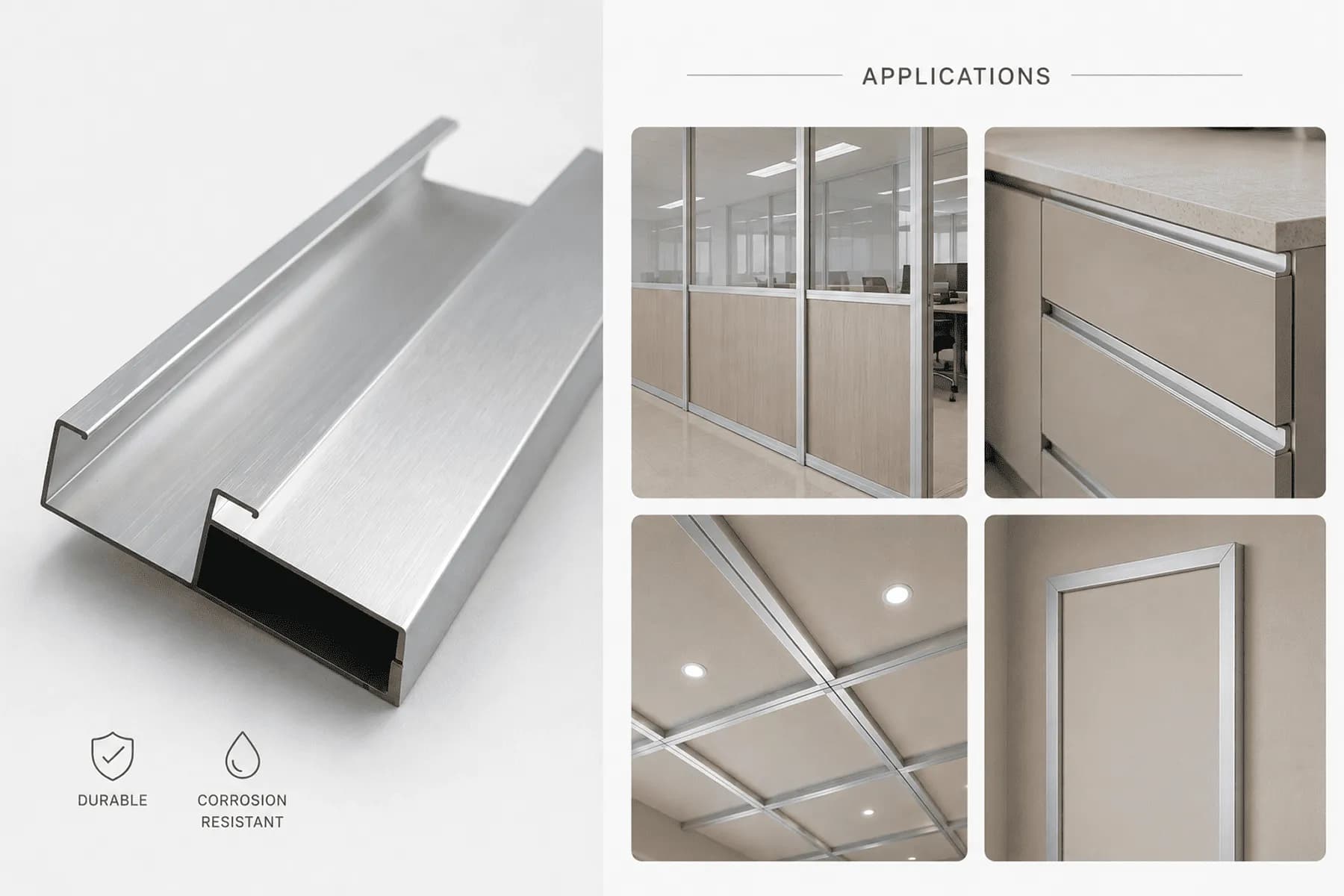
Buyers weighing a traditional surface-mounted bar handle against a more contemporary hidden grip should also consider the alternative approach entirely. Where the brief calls for a completely flush shutter face rather than a visible bar, i-Handle profiles sit inset within a routed groove instead of mounting on the surface, trading the traditional grip feel for an almost invisible integrated line. For kitchens that do call for a classic, dependable bar handle, the full range of aluminium kitchen shutter handle profiles — across round, D-shape, and square sections in all four standard finishes — gives dealers a single wholesale source to match hardware consistently across an entire project, from base cabinets to pantry units and wardrobes.