Two Materials, One Job: Framing Office Glass Partitions
When a business owner or architect specifies a glass partition system, the framing material decision usually comes down to two options: aluminium or uPVC. Both can hold a glass panel and both can be finished to some degree, but they come from fundamentally different manufacturing traditions — one metal, one plastic — and that difference shows up in strength, appearance, and long-term performance once the partition is actually in daily office use rather than sitting in a showroom.
uPVC framing built its reputation in residential window and door applications, where its lower cost and reasonable insulation made it the default choice for a long time, particularly in home renovation work. When that same material is used for taller, wider glass partition runs — the kind found in open-plan offices and conference rooms — its bulkier profile section and lower structural rigidity over long spans start to work against it, since the frame needs to be noticeably thicker just to stay rigid at ceiling height. Aluminium, by contrast, is the material commercial glazing and shopfront systems have relied on for decades specifically because it holds a slim, structurally rigid frame over longer spans without needing a thicker cross-section, which is exactly the property an office cabin wall needs.
Where Each Material Naturally Fits
A few criteria tend to decide the question for most projects:
- Span and height — taller floor-to-ceiling partitions favour aluminium's rigidity over uPVC's bulkier section, especially past standard cabin height.
- Look and finish — offices wanting a near-frameless, minimal sightline typically specify slim aluminium sections over visibly thicker uPVC frames.
- Branding requirements — aluminium accepts custom RAL powder coating for corporate colour matching, an option uPVC framing rarely offers in the same range of shades.
- Budget and application — uPVC can suit smaller, lower-traffic residential glazing where upfront cost is the primary driver rather than long-term durability.
- Longevity in daily commercial use — aluminium framing is generally expected to outlast uPVC under the repeated opening, closing, and cleaning cycles typical of an office partition door.
Setting the two materials side by side against the same factors makes the trade-off clearer, particularly for anyone comparing quotes from fabricators working in each material and trying to reconcile a lower headline price with what the partition actually needs to do over its working life.
Aluminium vs uPVC Partition Profiles, Side by Side
| Factor | Aluminium Partition Profiles | uPVC Partition Profiles |
|---|---|---|
| Material | 6063 T5 aluminium (IS 733) | Rigid PVC plastic compound |
| Standard Finish Options | Silver, Black Matte, Grey, plus custom RAL powder coating | Typically limited to white, grey, or woodgrain foil finishes |
| Profile Width | 25mm / 45mm / 60mm sections | Generally bulkier cross-sections needed to match aluminium's rigidity |
| Glass Support | Designed for 10mm & 12mm toughened glass, single or double glazing | Suited to lighter residential glazing thicknesses |
| Acoustic Performance | Double-glazing capable wide sections for meeting-room sound insulation | Adequate for residential use; less common in double-glazed commercial partitions |
| Typical Use Case | Office cabins, conference rooms, commercial fit-outs | Residential windows, doors, budget partitioning |
| Maintenance | Anodized/powder-coated surface wipes clean; resists denting and discolouration | Can yellow or warp with prolonged heat and UV exposure over years |
For anything above a standard cabin height, we tell clients to stop comparing price per metre and start comparing spans. A slim aluminium section holds a taller glass panel rigid without a visible mid-rail; ask a uPVC frame to do the same and you're usually looking at a thicker, more visually intrusive profile just to match the stiffness.
Why Most Offices Land on Aluminium
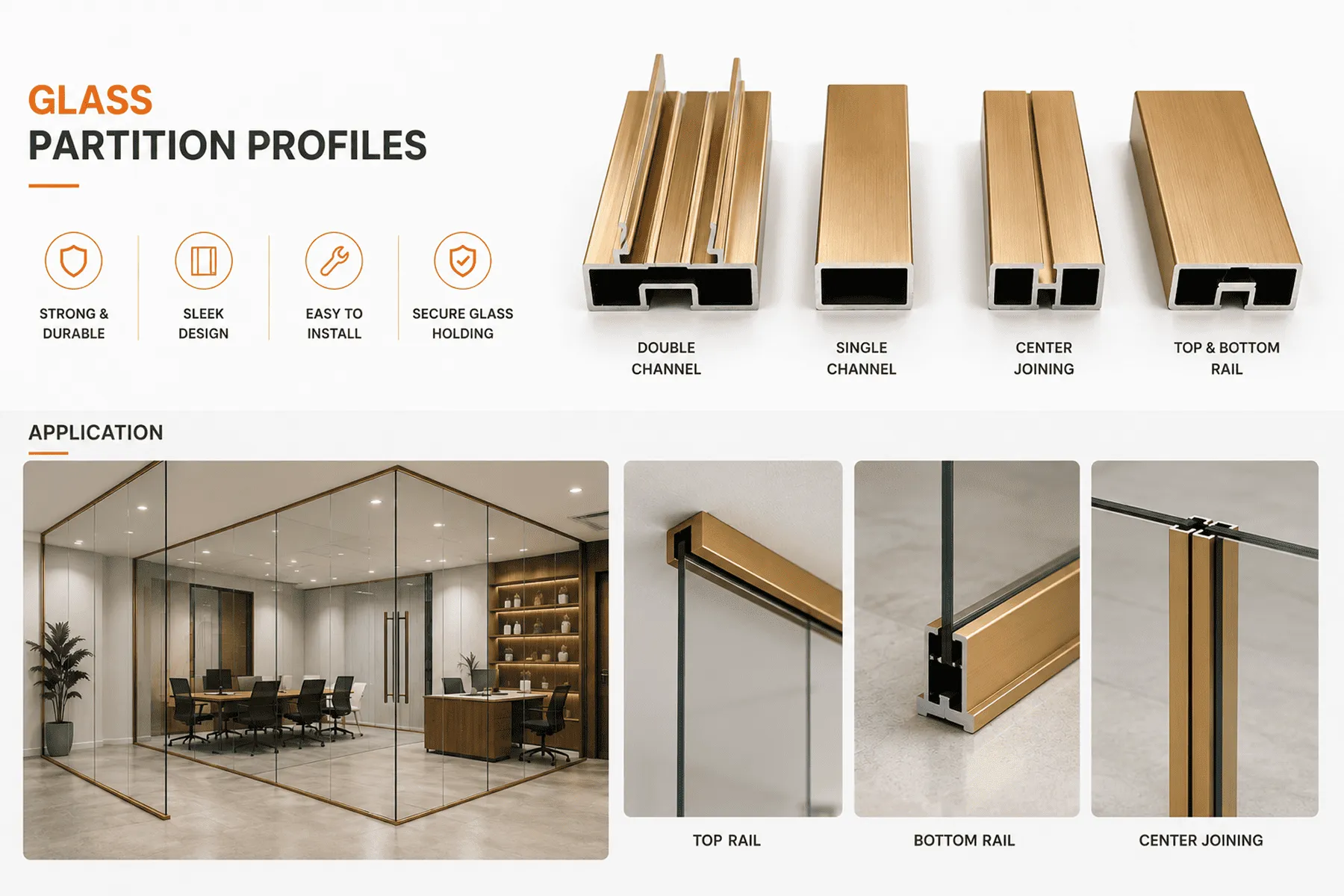
Beyond structural rigidity, aluminium partition profiles bring a few office-specific advantages that are hard to replicate in uPVC. Wider 45mm and 60mm sections include internal cavities that can route low-voltage wiring for partition-integrated lighting or electrical points — a detail increasingly requested in modern cabin design where clean sightlines matter as much as function. The double-glazing capable sections also give meeting rooms genuine acoustic isolation for confidential conversations, which matters more in an office than it typically does in a home, and is difficult to replicate in a plastic frame without significantly increasing its bulk. Aluminium systems are also designed for quick modular assembly and easy disassembly, letting office layouts evolve as a business grows — a flexibility that's much harder to achieve with a bonded or welded uPVC frame. Because the finished glass edges still need protecting regardless of which frame material is chosen, most aluminium partition specifications are paired with a matching Glass Glazing Profile to wrap and cushion the glass within the frame. For the full range of widths and finishes, the Glass Partition Profiles page covers what's available for office cabin and conference room fit-outs, including the door frame and strike-plate sections needed for a complete cabin.
Installation is another point worth weighing. Floor-mounted aluminium partition frames give the best stability, but where drilling into the floor isn't possible — over underfloor heating, for instance — structural adhesive mounting is available as an alternative, a flexibility that suits retrofits into existing office floors without disturbing services beneath them. uPVC systems tend to be less forgiving of this kind of adaptation, since the frame itself is doing less structural work to begin with and relies more heavily on its fixings for overall rigidity.
Neither material is objectively "better" outside of context — uPVC continues to make sense in residential window and door applications where its strengths line up with the requirement, and cost sensitivity outweighs the need for tall, branded, acoustically isolated glazing. For anything at office scale, however, with branding requirements, acoustic needs, or floor-to-ceiling glazing, aluminium framing remains the more common specification for good structural and aesthetic reasons that hold up over years of daily use, not just at handover.